
Many property owners assume that a quick site visit by a friend or relative is enough to keep a build on track. However, true independent site inspection goes far beyond glancing at rising walls or snapping a few photos.
A comprehensive inspection is a systematic, technical evaluation designed to protect your financial investment and enforce structural safety. It provides objective data so you never have to rely on contractor guesswork or blind trust. Knowing what a proper inspection actually covers ensures your capital is protected at every stage of construction.
Why Site Inspections Matter
Construction projects change quickly, and small, unnoticed mistakes can snowball into costly structural flaws within a matter of days. Objective inspections provide an accurate picture of your project’s current status by replacing contractor promises with verified site facts. This ongoing visibility allows you to spot discrepancies early, protect your budget, and keep your build moving forward safely.
Let us now look at what you should expect from your site inspection report.
1. Progress Assessment
A proper inspection measures actual work completed against the original baseline schedule. Instead of taking a contractor’s word that a phase is finished, an auditor inspects the site to confirm specific milestones, such as completed foundation pours or wall framing. Any timeline slippage is flagged immediately alongside the underlying cause, whether it stems from labor shortages or poor scheduling.
Why It Matters: Knowing the accurate state of your build protects your cash flow. It ensures you only release payments for verified work, keeping financial control firmly in your hands.

2. Quality of Workmanship
An independent auditor examines the physical integrity of every component to ensure it aligns with professional building codes. This includes checking masonry for straight, plumb walls, evaluating concrete pours for honeycombing or cracks, and verifying that roofing structures are properly anchored. Finishes and critical structural load-bearing elements are scrutinized before they are sealed under plaster or paint.
Why It Matters: Catching shoddy craftsmanship immediately prevents minor errors from becoming severe structural hazards. Fixing defects right away is vastly cheaper than tearing down finished work later in the build.
3. Materials Verification
During each scheduled visit, our auditor performs a focused check on the supplies present on site. They inspect the structural grade of steel bars, cement types, and masonry blocks to verify their quality.
The auditor counts inventory and compares current stockpiles against your contractor’s reported purchases and project specifications. They look for subtle swaps, like thinner gauge wiring or unapproved cement brands, that are easy to miss. This periodic check provides an accurate snapshot of what is actually being used.
Why It Matters: Unapproved material substitutions directly damage the structural strength and long-term resale value of your property. Periodic verification stops cheap swaps before those materials get permanently buried inside walls or concrete slabs.
4. Health and Safety Observations
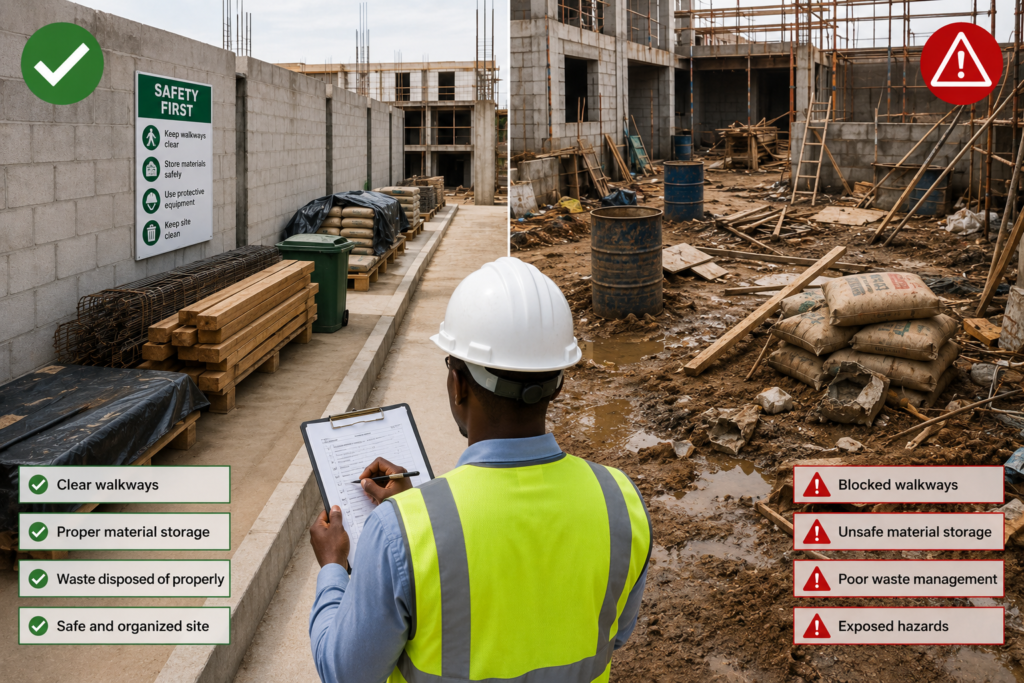
A thorough inspection report checks if the property is being managed responsibly and efficiently. It details general housekeeping, such as whether walkways are kept clear and waste is disposed of properly. The report notes if raw materials like cement and timber are stored safely off the ground away from rain and mud. It also flags hazardous clutter or exposed hazards that risk worker injuries or ruined inventory.
Why It Matters: Poor site housekeeping breeds wasted supplies, dangerous accidents, and costly project delays. A clean, well-organized environment signals a disciplined team that respects your financial investment.
5. Identification of Potential Risks
A quality inspection report highlights subtle red flags before they turn into expensive emergencies. It tracks early indicators of timeline delays, material shortages, and incomplete phases that lag behind schedule.
The report notes seasonal threats, like heavy rain, that could damage exposed structures or stall delivery trucks. It also flags communication breakdowns between the property owner, contractor, and site crew.
Why It Matters: Spotting risks early gives you time to take corrective action before minor setbacks double your budget. Proactive warnings keep your timeline intact and protect your hard-earned money.
6. Photographic Documentation
You naturally want to see exactly what is happening on your property while you are away. Standard contractor photos or blurry family snaps often hide crucial defects or miss key details.
A professional report delivers high-quality, clear visual evidence of your site’s actual condition. It features wide-angle shots to capture overall progress, along with sharp close-ups of specific work details. The report highlights critical stages and pinpoints exact areas that need immediate correction.
Why It Matters: High-resolution photos create an indisputable visual record of your property over time. They give you complete clarity, full transparency, and total peace of mind from anywhere in the world.
7. An Objective Written Report
High-resolution photos are great, but clear written context brings the full picture together. A solid inspection report delivers a clear summary of findings, progress updates, and key site observations.
It details identified concerns without bias and provides practical recommendations for necessary corrections. This document translates complex technical site conditions into simple, actionable facts you can easily digest.
Why It Matters: Unbiased written documentation eliminates guesswork and helps you make confident financial decisions. It creates a permanent paper trail that protects your interests for future reference.

Common Misconceptions About Site Inspections
Many property owners misunderstand what a professional site evaluation actually involves. Clearing up these myths helps you protect your investment more effectively:
1. “Photos Alone Are Enough”: Images are valuable, but they rarely tell the full story on their own. A snapshot might show completed brickwork, but it cannot reveal whether proper mortar ratios were used. Without technical context, a simple photo leaves critical gaps in your understanding. A real report pairs visual evidence with expert notes to explain what those pictures actually reveal.
2. “A Quick Visit Is the Same as an Inspection”: Wandering around a property for ten minutes is not an audit. A meaningful inspection follows a strict, structured process designed to spot subtle flaws. The focus is on active verification against your original specifications, not just passive observation. Real oversight requires methodical checks, careful measurements, and an eye for hidden risks.
3. “Site Inspections Only Matter When Something Goes Wrong”: Waiting for a crisis before checking your site is a costly mistake. Regular, scheduled audits help catch small defects before they escalate into structural failures or budget disasters. Early detection keeps your contractor accountable, saves you money, and prevents minor errors from crippling your timeline.
Independent site oversight provides structured verification, unbiased clarity, and early risk detection every step of the way. Consistent, professional audits ensure your hard-earned money turns into the quality property you paid for.
To Conclude…
Your property represents a significant financial commitment and a vision for your future. Taking a proactive approach to site oversight ensures you stay informed and empowered every step of the way. When you replace assumptions with clear, verified facts, you gain total confidence that your investment is in safe hands.
Are you building or renovating a property in Kenya while living abroad? Contact Us to schedule your independent site inspection and protect your hard-earned money with professional, transparent oversight!
FAQs on Proper Site Inspections
How Often Should a Site Inspection Be Carried Out?
The ideal frequency depends entirely on the scale, speed, and current phase of your project. For active structural phases like laying foundations or pouring concrete slabs, weekly or bi-weekly visits are best. During slower finishing stages, a single monthly check is often enough to keep everything on track.
Who Receives the Inspection Report?
The report belongs directly to you, the property owner. You can share relevant sections with your contractor or project engineer to request corrections, but having an independent copy ensures you always maintain primary control over your project records.
Do I Need to Inform My Contractor Before a Scheduled Visit?
No prior notice is strictly necessary, but informing your contractor fosters better cooperation. Scheduled visits ensure the site is accessible and key personnel are available, while still giving you an honest, real-time snapshot of daily operations.
What Happens If an Inspection Reveals a Significant Issue?
The report gives you clear, documented evidence of the problem. You can present these objective findings directly to your contractor to request immediate adjustments before making your next milestone payment.