
Sending your hard-earned money across the ocean to fund a construction project in Kenya takes a massive leap of faith. Few things are exciting when watching your dream home or investment property take shape in Kenya. Every completed foundation, rising wall, and finished room brings you closer to a goal that may have taken years to achieve.
Construction projects have a way of hiding costly problems in places most property owners never think to look. A small issue that goes unnoticed today can become an expensive correction months later. An unchecked decision can quietly increase costs without adding real value to the project.
For diaspora property owners, these risks become even greater because distance limits their ability to verify what is happening on site. Without regular visibility, it becomes difficult to know whether work is progressing according to plan, whether materials are being used correctly, or whether project funds are being spent as intended.
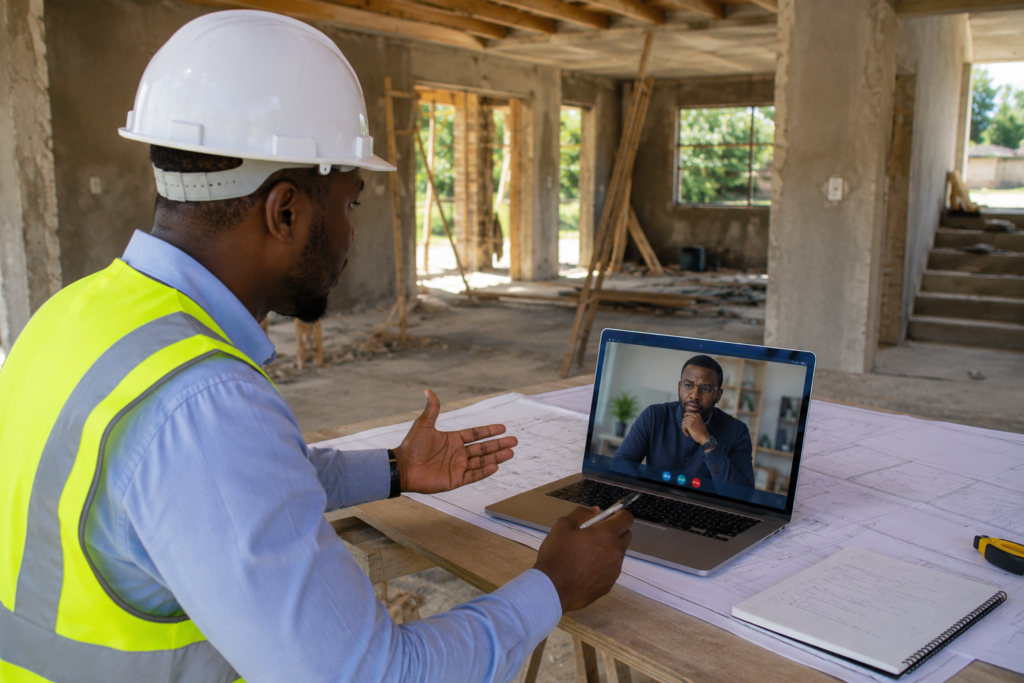
Next, let’s discuss why independent oversight has become an important part of protecting construction investments and avoiding unnecessary losses.
1. Enforcing the Bill of Quantities (BQ) and Stopping Ghost Materials
The Bill of Quantities serves as the financial roadmap for your construction project and outlines what should be purchased, supplied, and completed. It is your ultimate financial shield, but it is completely useless if nobody enforces it on-site.
Unscrupulous contractors frequently order extra truckloads of cement and steel that never actually arrive at your property. Yes, believe it or not, they have other projects that need these materials.
These ghost materials are quietly diverted to other projects while you receive the inflated receipts for payment. Independent oversight means an expert measures every single delivery against the original contract specifications before any money changes hands. Verifying the actual material count on the ground ensures you only pay for what is built into your walls.
2. Preventing Material Substitution
Construction specifications are carefully selected for a reason, whether the goal is durability, safety, appearance, or long-term value. However, some projects experience material substitution when products different from those originally approved are used on site.
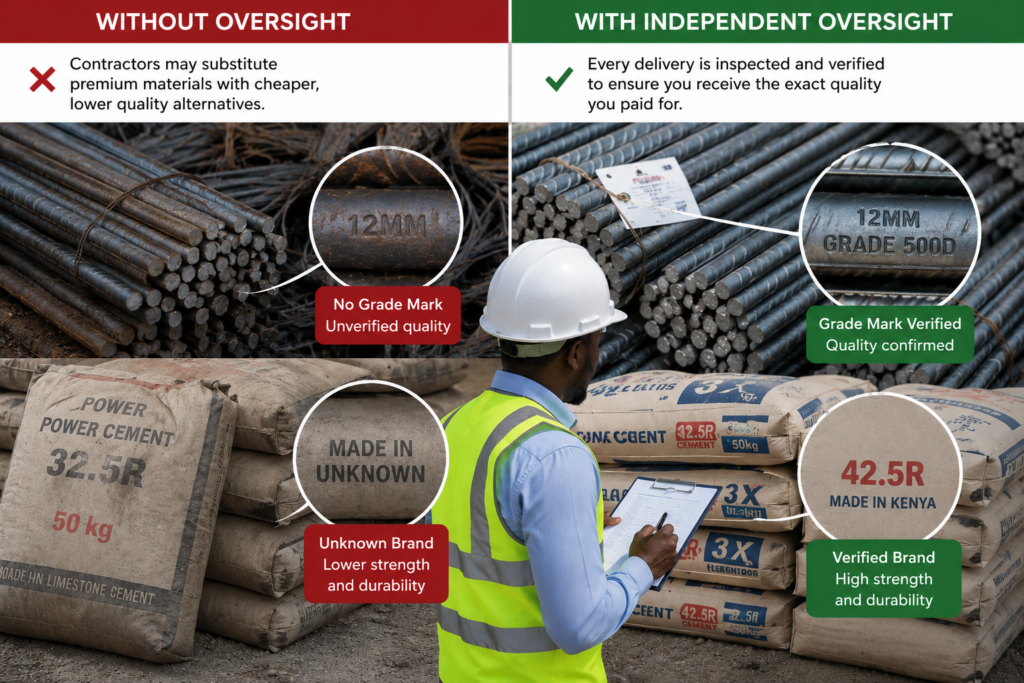
In some cases, the replacement materials may be cheaper, lower quality, or unsuitable for the intended application. Contractors often cut their own costs by quietly swapping your premium materials for cheap, substandard alternatives.
You might pay for high-grade structural steel or genuine waterproof cement, but inferior brands end up in your building. These hidden swaps maximize the builder’s profit margin while severely compromising the long-term safety of your investment.
Independent oversight ensures that every single delivery undergoes strict quality inspection before it gets mixed or installed. Verifying manufacturer stamps and material grades on site guarantees you actually get the exact quality you paid for.
3. Preventing the Devastating “Demolish and Rebuild” Trap
A wall built in the wrong location, poorly executed structural work, or incorrect measurements can trigger costly rework. These problems do not just increase expenses. They can also delay project completion and disrupt carefully planned budgets.
Independent oversight helps identify issues early through regular inspections and ongoing monitoring of construction progress. When concerns are spotted quickly, corrective action can often be taken before additional work is built on top of the problem.
Addressing mistakes at an early stage is usually far less expensive than demolishing completed work and rebuilding it later. This helps protect both your construction budget and the long-term quality of the finished property.
4. Defeating Artificial Project Delays and Labor Inflation
Many local contractors purposefully drag out your timeline because a longer build means more money in their pockets. They inflate their daily payroll by listing ghost workers who never actually step foot on your dusty construction site. You end up paying weekly wages for a massive crew while only two people are actually laying bricks.
Some delays are unavoidable and may result from weather conditions, material shortages, or other genuine challenges. However, projects can also experience unnecessary slowdowns when progress is not closely monitored and verified.
For property owners living abroad, it can be difficult to determine whether delays are justified or preventable. Frequent monitoring makes it easier to identify situations where timelines are slipping without a clear explanation.
5. Prevents Unverified Expenses
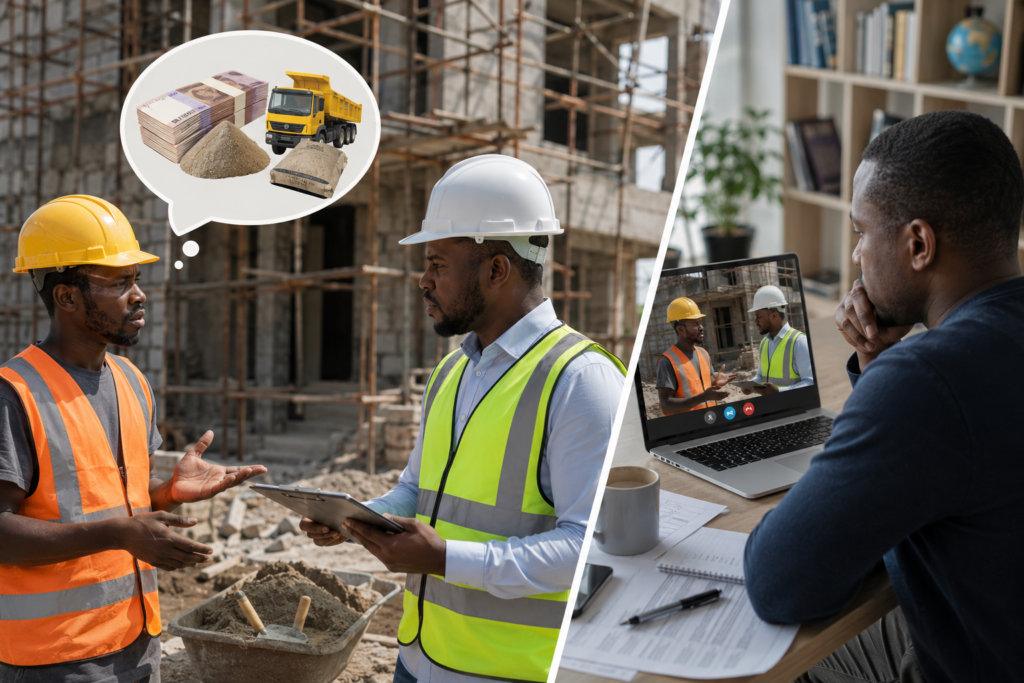
Contractors love to throw sudden, unexpected emergency expenses at diaspora clients because they know you cannot easily verify them. You might receive an urgent text demanding extra cash for a broken machine or an unforeseen site complication.
While many of these expenses are legitimate, some costs can be difficult to verify when you are managing the project from abroad. You may receive requests for transportation costs, emergency purchases, additional materials, or unexpected site requirements without supporting documentation.
Over time, these expenses can accumulate into a significant amount of money that was never included in the original budget.
Independent oversight means every single claim is physically investigated and verified on site before any extra cash is approved. Stopping these unverified financial demands ensures that your funds are only spent on actual, genuine project needs.
6. Eliminating the Diaspora Tax on Finishing Materials
Finishing materials often represent some of the largest purchases during a construction project and have a major impact on the final result.
Items such as tiles, sanitary ware, kitchen fittings, doors, lighting fixtures, and paint can quickly consume a significant portion of the budget. Unfortunately, some suppliers and intermediaries assume that diaspora property owners have larger budgets and limited visibility into local market prices.
This can lead to inflated quotations, excessive markups, or recommendations that cost far more than necessary.
Having an independent representative on the ground also makes it easier to challenge unreasonable pricing before purchases are approved. Small savings across multiple finishing materials can add up to substantial amounts over the course of the project.
This helps ensure that your budget is spent on quality materials rather than inflated costs that provide little additional value.
7. Eliminating Design Creep and Unauthorized Structural Variations
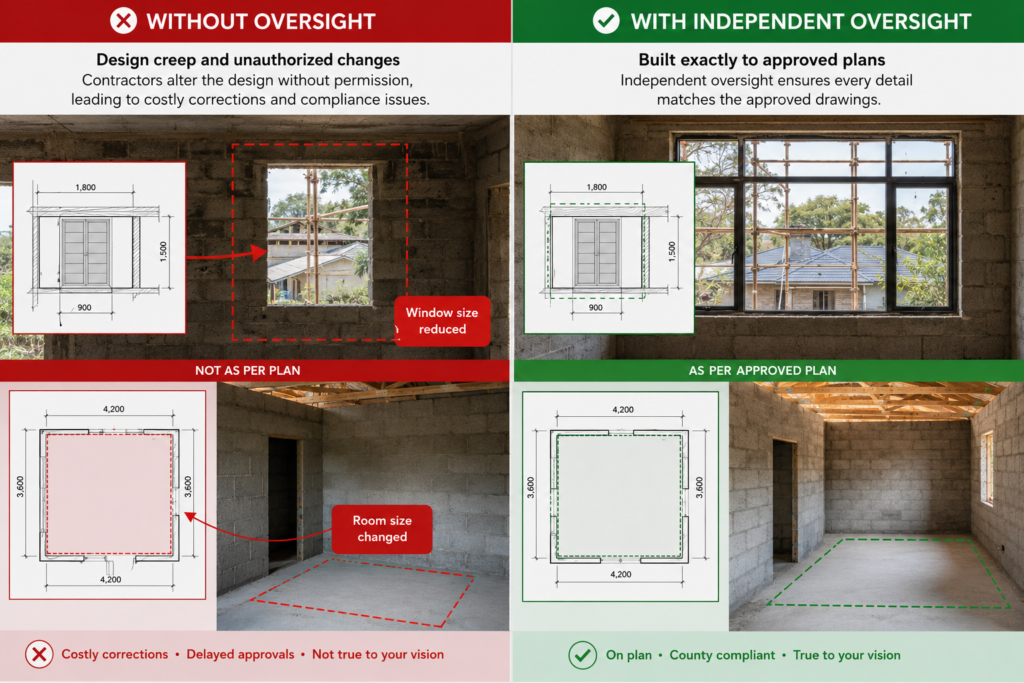
Contractors sometimes take it upon themselves to alter your architectural drawings without getting your explicit permission first. They might cut down the size of windows or change room dimensions simply to make their own job easier.
These unauthorized variations alter your original vision and often require expensive corrections to pass final county government compliance checks.
Independent oversight acts as a strict guardian for your approved blueprints from the very first day of construction. Making sure the builders follow every single dimension perfectly prevents your project from changing shape behind your back.
8. Enforcing “Stage-Gate” Payouts Over Blind Timelines
Releasing funds based purely on the calendar is the easiest way to watch your contractor abandon an incomplete site. Many builders demand massive cash advances before completing the previous phase of work, leaving you completely exposed to financial loss.
Independent oversight replaces these risky payment habits with strict, milestone-driven financial gates that require independent verification. Your contractor only receives their next chunk of money after a professional verifies the exact quality of the completed stage. Linking payouts directly to physical progress ensures the builder stays motivated and your money stays completely safe.
9: Direct Procurement Verification: Bypassing Contractor Markups
Contractors rarely give you the true wholesale market cost for construction materials. When they purchase major bulk items, like wholesale cement, steel rebars, or stone cladding, they often add a hidden 15% to 30% diaspora markup to the receipts they present to you. They pocket this quiet difference as an unauthorized bonus on top of their agreed management fees.
Independent oversight bypasses this middleman exploitation entirely by auditing supplier invoices directly at the source. Verifying actual factory-gate prices ensures your money goes directly into the fabric of your building
To Sum It up…
Building a home back in Kenya represents a massive financial milestone for your entire family. You deserve to enjoy this investment journey without the constant anxiety of long-distance project management.
Professional ground monitoring gives you the leverage needed to maintain total control over your funds. This specific protection ensures your hard-earned money builds actual value instead of funding contractor greed. You can easily protect your future property wealth by introducing independent checks on your site today.
Contact us to schedule an Executive Site Intelligence Visit and secure complete peace of mind.