
Building a home or developing property in Kenya while living thousands of miles away requires immense financial commitment. Every month, you wire hard-earned funds across borders with high hopes, expecting steady progress, quality materials, and transparent communication.
Without on-the-ground systems, however, managing a project from abroad often turns into a stressful cycle of vague text updates, unexpected budget spikes, and endless anxiety over what is actually taking place on site.
Staying in complete control of your real estate investment does not require you to catch the next flight to Nairobi or constantly second-guess contractor reports. True oversight comes from setting up structured, independent channels that replace blind trust with verifiable facts. Establishing clear payment boundaries, demanding structured visual evidence, and placing objective eyes on the ground turn a high-risk gamble into a predictable, successful journey.
What Does “Staying in Control” Actually Mean?
Handling every single task personally on-site is unnecessary for effective property ownership. True control centers on maintaining full clarity over your project without drowning in day-to-day chaos.
Smart oversight relies on four essential pillars:
- Knowing what is happening: You receive clear updates on exact site progress without relying on rumors or vague phone calls.
- Understanding how your money is spent: Every shilling transferred matches real materials delivered and verified work milestones.
- Making key decisions directly: You retain authority over design shifts, major purchases, and contract adjustments while reliable team members execute your instructions.
- Verifying information independently: You cross-check site claims using unbiased evidence rather than taking verbal promises at face value.
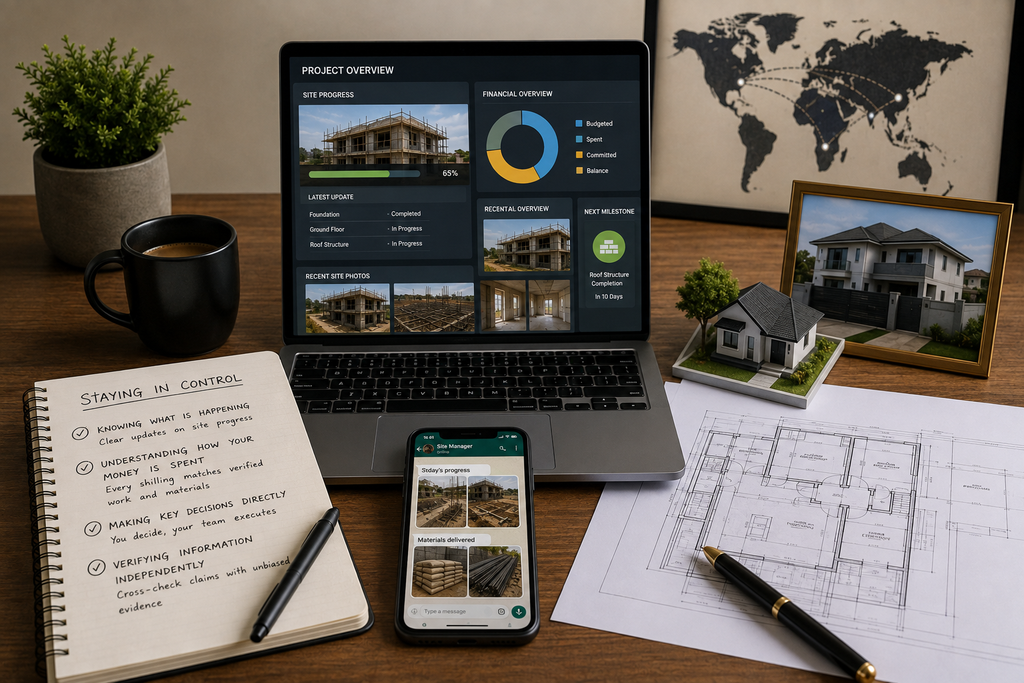
Maintaining control aims for complete visibility rather than constant intervention. Establishing simple, structured monitoring systems lets you stay fully informed, protecting your peace of mind without forcing you to micromanage every minor detail from thousands of miles away.
Let us venture into how can stay in control of your property:
1. Know Exactly What Is Happening on Your Property
Staying informed requires a clear communication routine with your site team. Setting predictable update schedules prevents long silences and avoids unexpected project surprises.
You need to establish three basic ground rules early:
- How often you receive updates: Choose a consistent frequency, such as weekly site reports or bi-weekly milestone checks.
- What information each update contains: Require specific details, including work completed, materials used, and upcoming tasks.
- Who is responsible for providing it: Designate one clear point of contact on site to deliver all official reports.
Ask for evidence, not just verbal reassurance. Friendly phone calls and text messages rarely capture true site conditions. Verbal promises can easily mask costly mistakes or stalled schedules.
Demanding hard evidence transforms informal chats into accountable reporting. Require every update to include dated high-resolution photographs, official delivery receipts, verified measurements, and technical sign-offs. Reviewing real documents gives you full visual proof before releasing your next installment.
2. Set Clear Expectations From the Beginning
Put important agreements in writing. Starting a project with vague instructions always leads to confusion. Verbal agreements vanish the moment a financial dispute arises. Writing everything down protects your investment from day one.
Document every major detail before work begins:
○ Project scope: Define exactly what work will be completed.
○ Specifications: List exact material grades and quality standards.
○ Timelines: Set firm deadlines for specific construction phases.
○ Budgets: Cap maximum spending for labor and site materials.
○ Responsibilities: Assign specific duties to contractors and supervisors.
○ Approval requirements: Outline which major decisions require your direct sign-off.

Unclear instructions create expensive delays and serious site friction. Every person involved should understand their exact daily responsibilities. Your site team must also know exactly which choices require your explicit permission. Removing guesswork keeps the project moving smoothly without unauthorized spending or structural mistakes.
3. Keep Control of Major Financial Decisions
Know before money leaves your account. Sending funds blindly across borders is one of the fastest ways to lose control of your budget. Unapproved site purchases and surprise cost overruns can quickly drain your reserves.
You need to establish strict financial boundaries before any transaction occurs:
- Major purchases: Require direct authorization for large material buys, high-value equipment rentals, or bulk supplier invoices.
- Contractor payments: Schedule release dates strictly around agreed project stages rather than arbitrary calendar dates.
- Variations: Demand detailed cost breakdowns for any suggested design shifts before approving extra work.
- Additional work: Require written justification and itemized pricing before adding tasks outside your original contract.
- Unexpected expenses: Set clear spending limits so contractors cannot incur site debts in your name without prior approval.
Verify progress before approving payments. Releasing money based on verbal assurances often leads to paying for incomplete or poor-quality work. Linking every financial transaction to verified physical evidence protects your funds.
4. Create a Reliable Reporting System
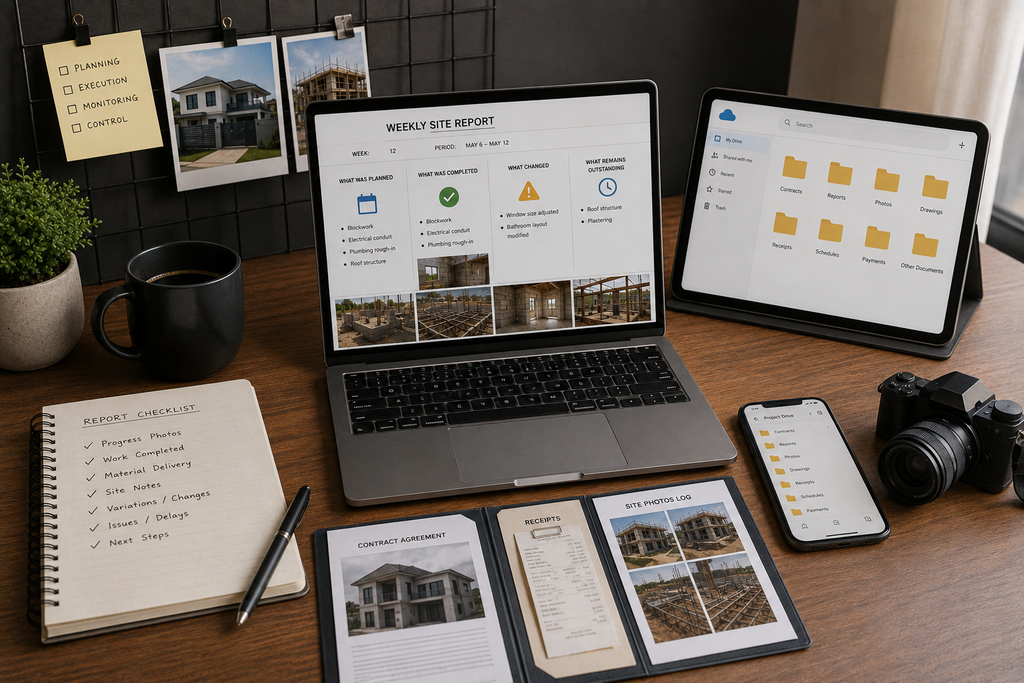
Consistency Matters. Scattered WhatsApp messages and random voice notes make tracking a long-term build nearly impossible. Staying in control requires a predictable, structured flow of information. A consistent reporting system gives you an accurate snapshot of site health every single week.
A standardized report allows you to evaluate four key elements side by side:
- What was planned: Comparing target goals for the week against actual site activity.
- What was completed: Confirming finished tasks with clear proof before moving to the next phase.
- What changed: Identifying unapproved adjustments to materials, layouts, or worker allocations.
- What remains outstanding: Tracking delayed tasks so small setbacks do not derail your overall timeline.
Losing track of receipts, architectural plans, or past photos creates confusion when disputes arise. Store all weekly reports, contracts, receipts, and photo logs in a single organized digital space like Google Drive or Dropbox. Having a clean, searchable archive ensures you can reference past decisions, verify historical payments, and resolve site queries instantly.
5. Use Independent Verification
Don’t rely on a single source of information. Contractors, caretakers, relatives, and property managers each offer a specific view of your build. Relying solely on one person’s updates, however, opens the door to blind spots, sugarcoated reports, or hidden conflicts of interest. Seeking an objective third-party perspective cuts through personal bias and delivers true site clarity.
Also, verify important information before acting. Making major decisions based on unverified reports risks wasted funds and severe delays. Engaging independent eyes on the ground ensures your choices rest on solid visual facts.
Independent site audits verify five critical areas:
- Actual progress: Confirming structural milestones are truly finished before you wire the next payment.
- Workmanship: Checking that concrete mixes, brickwork alignment, and joint sealing meet professional building standards.
- Material use: Validating that specified material grades and quantities actually reached your site without substitutions.
- Project conditions: Assessing overall site cleanliness, safety practices, and proper material storage during rain.
- Reported concerns: Investigating claimed site emergencies or sudden budget hikes before approving extra spending.
6. Know Who Has Authority to Make Decisions
Establish clear lines of command. Projects quickly run into costly mistakes when too many people give orders on site. Relatives, local caretakers, and site supervisors often offer conflicting opinions to your builders. Without a clear chain of command, contractors get confused, work gets delayed, and unauthorized changes get made without your knowledge.
You need to establish strict decision-making boundaries early:
- Identify your single spokesperson: Designate one person as your official point of contact authorized to pass instructions to the site team.
- Limit contractor discretion: State clearly that builders cannot alter floor plans, substitute materials, or modify structural designs on their own.
- Inform all stakeholders: Ensure your contractors, family members, and caretakers know exactly who holds final approval power.

You should also retain final approval on key changes. Giving local representatives permission to handle daily logistics should never mean surrendering overall control. Major financial shifts, contract amendments, and design alterations must remain exclusively in your hands. Requiring your explicit, written sign-off for any significant site change ensures your vision and budget stay protected.
7. Monitor Your Property Even When Nothing Is Being Built
Inactive land still requires active oversight. Vacant land and paused construction sites face quiet risks that often go unnoticed from abroad. Unattended plots quickly attract encroachment, illegal dumping, boundary disputes, or unauthorized farming. Leaving your property unmonitored creates opportunities for third parties to stake informal claims or damage perimeter fencing.
Protect your assets with regular site checks. Maintaining control means keeping eyes on your property during dormant periods. Periodic site visits ensure your investment remains secure and ready for future development.
To Conclude…
Managing property from abroad does not mean sacrificing peace of mind or surrendering control to distance. Setting up clear communication routines, enforcing strict payment approvals, and demanding objective verification turn complex projects into manageable, predictable processes. Keeping firm systems in place protects your hard-earned money and ensures your vision becomes a reality on your terms.
Ready to gain full clarity over your property in Kenya? Contact Us today. Our team delivers independent site audits, structured photo reporting, and professional oversight, giving you total control and absolute confidence no matter where you are in the world.